Shrinking is the Next Growth Signal: A Case Study Zegna’s Distribution Strategy
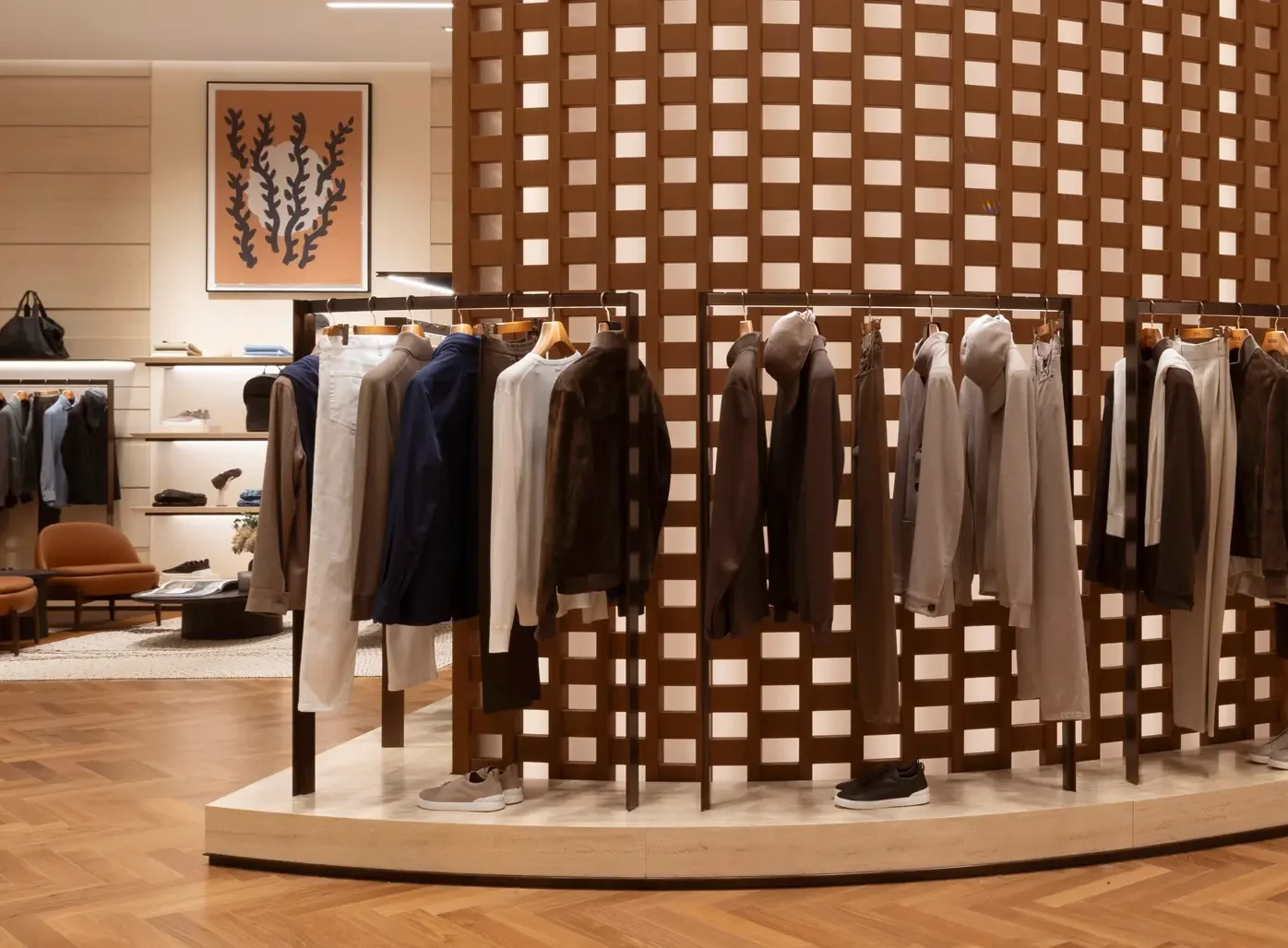
There was a period not long ago where you could find Zegna products for dirt cheap. Diffusion lines with inconsistent quality had confused the market, department stores were running 50% off sales at the end of every season, and the brand was stuck in a trap that Ralph Lauren and many others had fallen into before them: rapid expansion had diluted everything that made the brand worth buying in the first place. What followed was one of the most disciplined brand recoveries in modern menswear. Zegna killed its diffusion lines, consolidated everything under one name, pulled back from wholesale aggressively, and rebuilt the entire operation around direct relationships with clients. Loro Piana, quietly, had been running a version of the same playbook for years. This case study looks at what they did, why it worked, and what it means for how luxury can sustainably scale.
The Immediate Problem: Overexpansion and Dilution
The temptation in any growing business is to use distribution as a golden goose. More channels, more stockists, more doors, more sales, more profit. For most industries that logic holds, but we’ve already learned that luxury defies logic.
When Zegna was operating multiple diffusion lines simultaneously, Z Zegna and Zegna Sport, the brand had a serious identity problem. Z Zegna suits were made in Mexico with fused construction and sold for under $1,000. Mainline Zegna suits were made in Italy and Switzerland with full canvas construction and sold for multiples of that. Both had the Zegna name on the label. A buyer who encountered the entry-level product first and thought it was the brand's standard had no reason to pay four times as much for the real thing. And a buyer who had paid for the real thing and then saw the diffusion product on a department store clearance rack felt like they had been played.
The department store relationship compounded the problem. Gildo Zegna has described the wholesale model as a transactional relationship. Department stores have no loyalty to any single brand, they exist to move product by any means neccesary. When the season ends and inventory needs to clear, Zegna suits go on sale next to twelve other brands at whatever discount it takes to move them. The pricing signal it has been building all season gets destroyed in a few weeks of clearance events, and every buyer who sees that discount recalibrates what they think Zegna is worth.
Primary Case: How Zegna Rebuilt
Kill the diffusion lines
In the run up to its NYSE listing in 2021, Zegna discontinued its Z Zegna line and fold the Couture XXX runway collections into a single unified Zegna label, dropping the "Ermenegildo" moniker entirely to market everything simply as Zegna. Z Zegna had existed since 2004 and had its own stores, its own creative directors, and its own client base. Killing it meant walking away from a revenue stream in the short term to protect the brand's integrity in the long term. Retrospectively, and extremely bold and brillant move in my opinion.
The message they wanted to convey was there is one Zegna, and that they will focus all their efforts on intention as opposed to scale.
Consolidate distribution
Once the confusing product hierarchy was cleaned up, the distribution followed. The group began killing wholesale accounts and converting franchise operations into directly controlled points of sale, with the Zegna brand's retail channel reaching 85 percent of total sales by 2023.
The Korea conversion is the clearest single illustration of how seriously they took this. As of January 2024, Zegna converted all 16 of its South Korean stores from franchise to direct operations. They got full control over how the brand presents itself, prices its product, and manages its client relationships across an entire market. It is expensive and difficult and once again, another brilliant move!
Numbers.
The financial results are pretty straigtforward. In 2024, Zegna's direct-to-consumer channel grew 11 percent with double-digit growth in the United States. By H1 2025, wholesale branded revenues were down 27 percent year on year, described by the group as a strategic decision. DTC grew 4 percent over the same period. The brand is shrinking one channel on purpose and growing the other as a direct result. And the most important line in any of their earnings communications: they are not seeing any resistance to prices.
When buyers cannot easily find discounted product, they stop waiting for it. When the brand controls every touchpoint in the purchase experience, it can charge what the product is actually worth. Price resistance disappears when the brand has protected its own perceived value.
Why does this work?
In a previous article I had written, I described how luxury brands should shift toward bespoke and intimate client relationships as a business model. The nature of this is the scale: you cannot have a high foot traffic and expect to know everything about everyone. You need to identify the client profile you are selling to, and deliberately change everything to conform to serving that population. When Zegna squeezed distribution, foot traffic falls, and their brand is seen in more selective and influential areas. Less people shop but they have higher ticket purchases, which wins on two fronts. One is you can have a very close and personal relationship with the clientele, and two is the client acquisition cost lower. When services feel more intimate, there’s less friction to getting regulars. That knowledge makes every subsequent decision better: buying decisions, outreach timing, product development. It compounds year over year in ways that wholesale revenue never can.
What can we learn from this?
Protect pricing integrity above everything else. Every discounted product moving through a channel the brand cannot control is a permanent tax on brand image. The long-term damage is larger and harder to see until it is too late.
Treat client data as infrastructure, not a byproduct. The brands winning in direct-to-consumer are winning on every front. Every interaction in a controlled environment generates data that makes the next interaction more effective. That compounding advantage I’ve mentioned is one of the most hidden sources of brand strength in luxury.
Watch the secondary market as a leading indicator. I’ve mentioned this in another article I’ve written. Price retention on the secondary market is a leading signal of brand image. Buyers who trust that a brand's product holds value buy more confidently, pay full price more willingly, and come back more reliably. Monitoring secondary market velocity by category gives a brand real-time feedback on where its equity is strong and where it is quietly eroding.
Closing
The luxury market is split into two groups. On one side are brands that have done the hard work of controlling how they appear, where they sell, and who they sell to (think Hermès and Loro Piana) and are building stable, high-margin businesses as a result. On the other are brands still trading brand equity for distribution volume, competing in channels that commoditize them, and slowly losing pricing power they will not easily recover (think Versace and Gucci).
Zegna came back from the edge and rebuilt something genuinely strong. It is a brand that I find truly commendable in understanding the dynamics of this convoluted market, where its peers have bet on the other direction and failed.
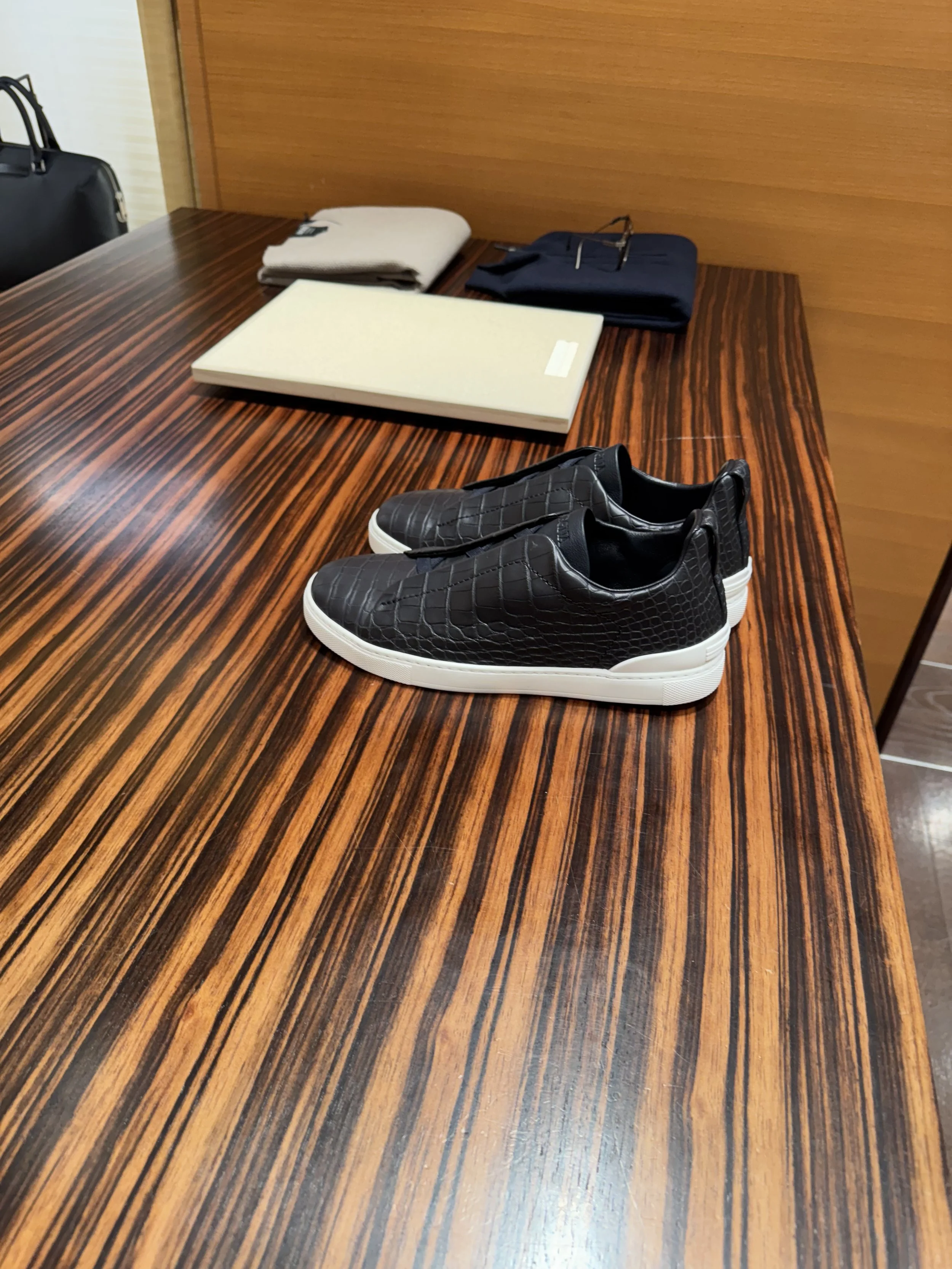
Zegna’s Famous Triple Stitch Sneakers Rendered in Full Alligator
$18,000? Not for me…